For a UK sole trader comparing Cuppa vs FreeAgent, the practical difference is scope:
- Cuppa is built for simple sole-trader bookkeeping and low admin overhead
- FreeAgent is a broader accounting product that can suit more complex operations
If your workflow is straightforward, simpler usually means more consistent.
Key Takeaways
- Cuppa tends to fit sole traders who want clear, repeatable weekly routines.
- FreeAgent tends to fit users who want broader accounting functionality in one platform.
- Your best option is the one you can keep up with weekly, not the one with the longest feature list.
Cuppa vs FreeAgent at a Glance
| Criteria | Cuppa | FreeAgent |
|---|---|---|
| Product style | Sole-trader-focused | Broad accounting platform |
| Setup depth | Low | Medium |
| Ongoing admin load | Lower for simple use cases | Moderate for simple use cases |
| Best fit | Simple compliance-first workflows | Broader accounting requirements |
| Learning curve | Low | Medium |
Pricing and Value Lens
Advertised UK pricing (last checked: 27 February 2026):
| Plan | Cuppa | FreeAgent |
|---|---|---|
| Entry plan | Free plan, or Pro at £6/month (£59/year) | Intro monthly: £9.50 + VAT/month (first 6 months) |
| Standard paid plan | £6/month (Pro, for HMRC filing) | Standard monthly: £19 + VAT/month (after intro period) |
| Annual pricing snapshot | £59/year (Pro) | Intro annual: £95 + VAT/year (first year), then £190 + VAT/year |
| Intro offers | No free trial (Free plan available forever) | 50% off first 6 months (monthly) or first year (annual) |
Notes:
- Prices above are publicly advertised list prices and may change.
- VAT treatment and intro periods affect real monthly spend.
- Always verify before purchasing: Cuppa pricing and FreeAgent pricing.
For most sole traders, the real cost includes both subscription and admin time.
MTD ITSA Workflow Fit
HMRC compliance is operational: records must be kept consistently and submissions made on time.
Reference: HMRC MTD for Income Tax guidance.
If you want the least moving parts in your weekly process, a focused tool often performs better in practice.
Migration from Spreadsheets
Cuppa often works better when:
- you are moving from basic spreadsheet tracking
- you want minimal setup decisions
- your bookkeeping needs are straightforward
FreeAgent often works better when:
- you want a larger accounting toolkit
- your business has growing process complexity
- you are comfortable with broader configuration options
Pros and Cons Summary
Cuppa
Pros
- designed for sole traders
- low setup friction
- straightforward routine tracking
Cons
- narrower than full accounting suites
FreeAgent
Pros
- broad accounting capabilities
- suitable as complexity grows
Cons
- may feel heavier for very simple sole-trader workflows
See the Difference
The best way to understand the difference between Cuppa and FreeAgent is to look at them side by side.
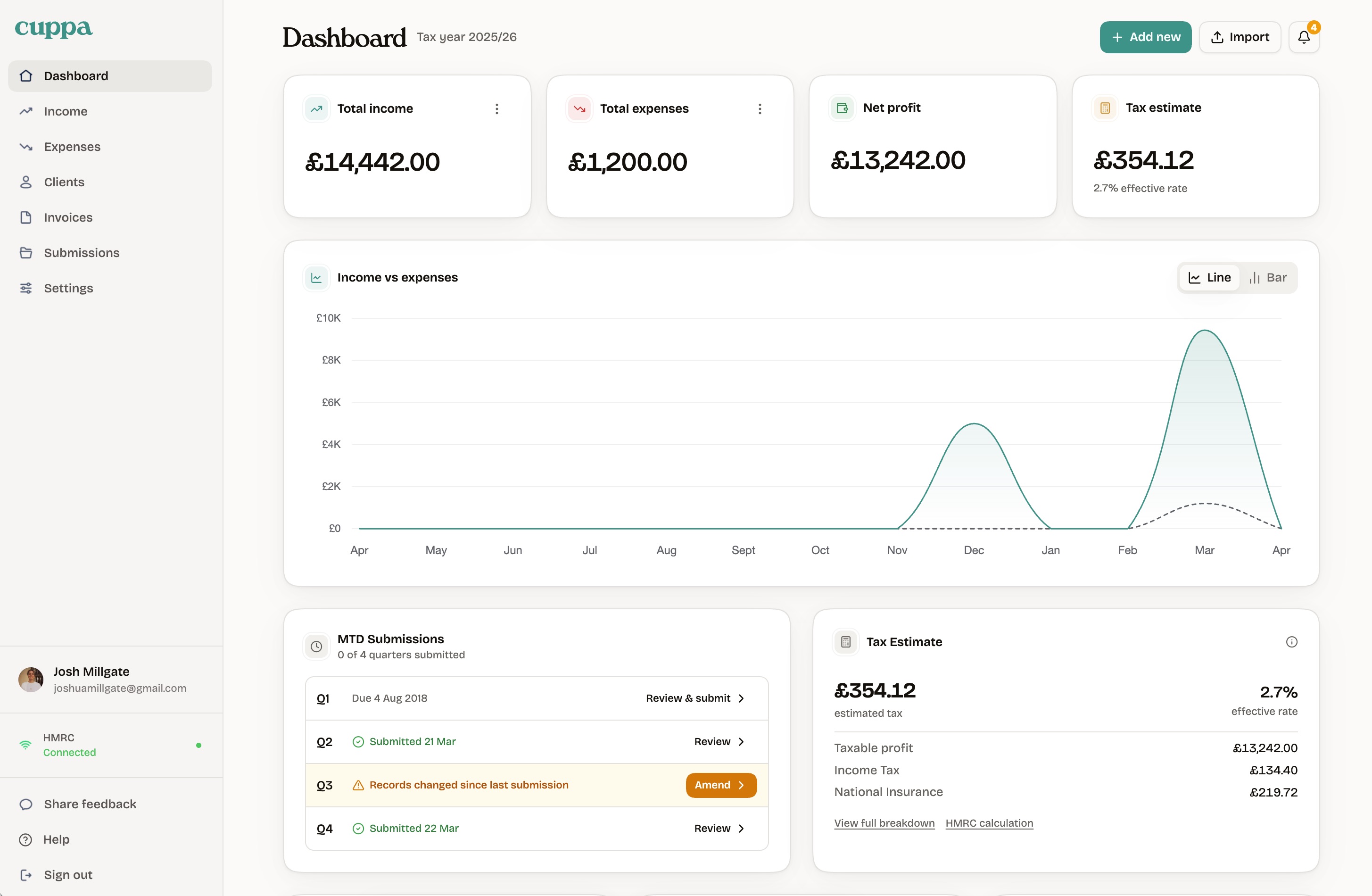
Cuppa's dashboard:
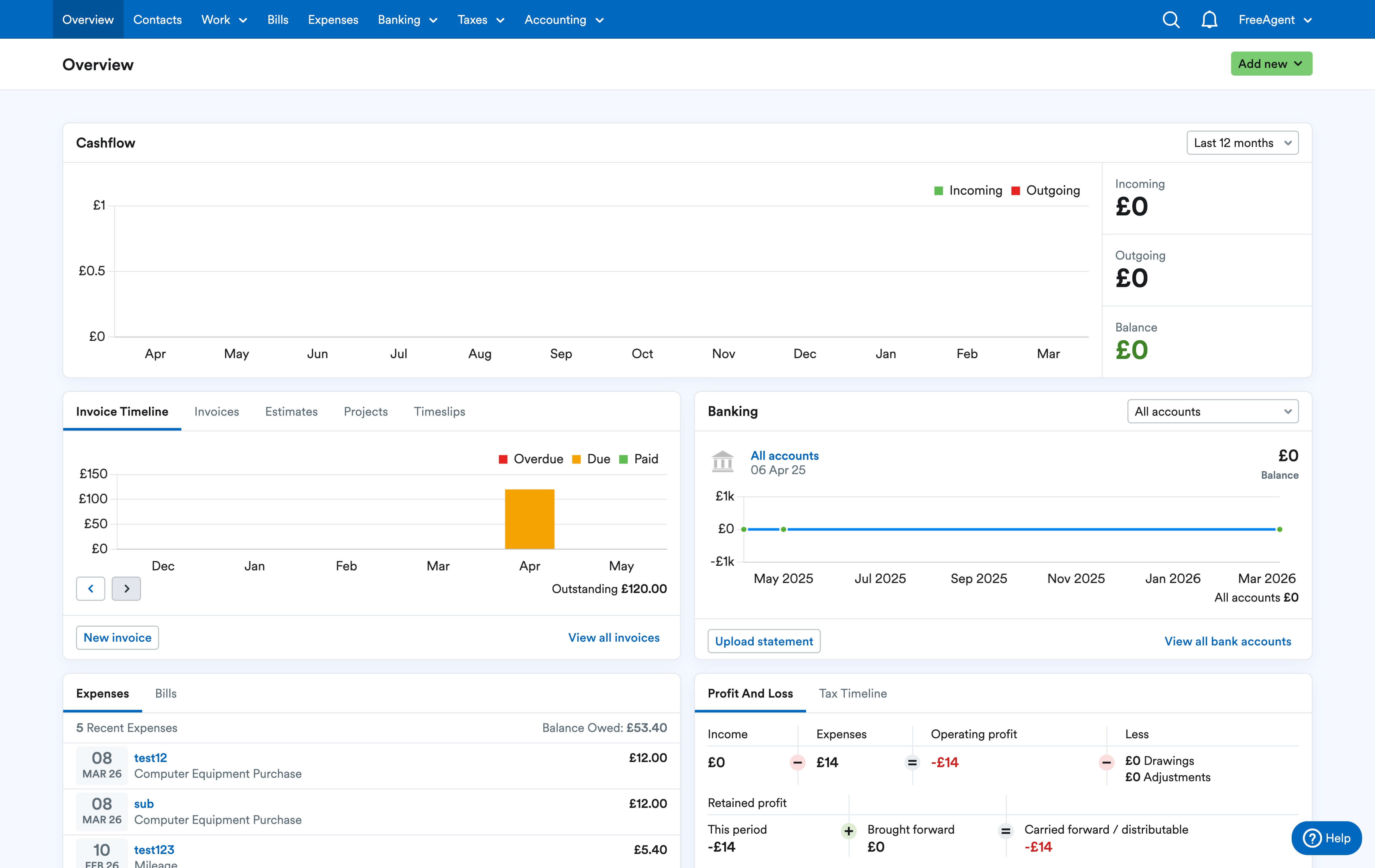
FreeAgent's dashboard:
Cuppa shows you exactly what matters: total income, total expenses, net profit, and your tax estimate. One screen, no clutter.
FreeAgent's dashboard is packed with panels: cashflow charts, invoice timelines, banking summaries, expenses, profit and loss, and tax timelines. Powerful if you need all of it. Overwhelming if you do not.
For a sole trader who wants to open the app, log a transaction, and get back to work, Cuppa is designed to stay out of your way. No accounting jargon, no nested menus, no configuration rabbit holes. Just a clear, accessible interface that makes weekly bookkeeping feel effortless.
Verdict: Which Should You Choose?
Choose Cuppa if you want simple, consistent, low-overhead bookkeeping.
Choose FreeAgent if you need wider accounting functionality and expect operational complexity to increase.
Related guides: